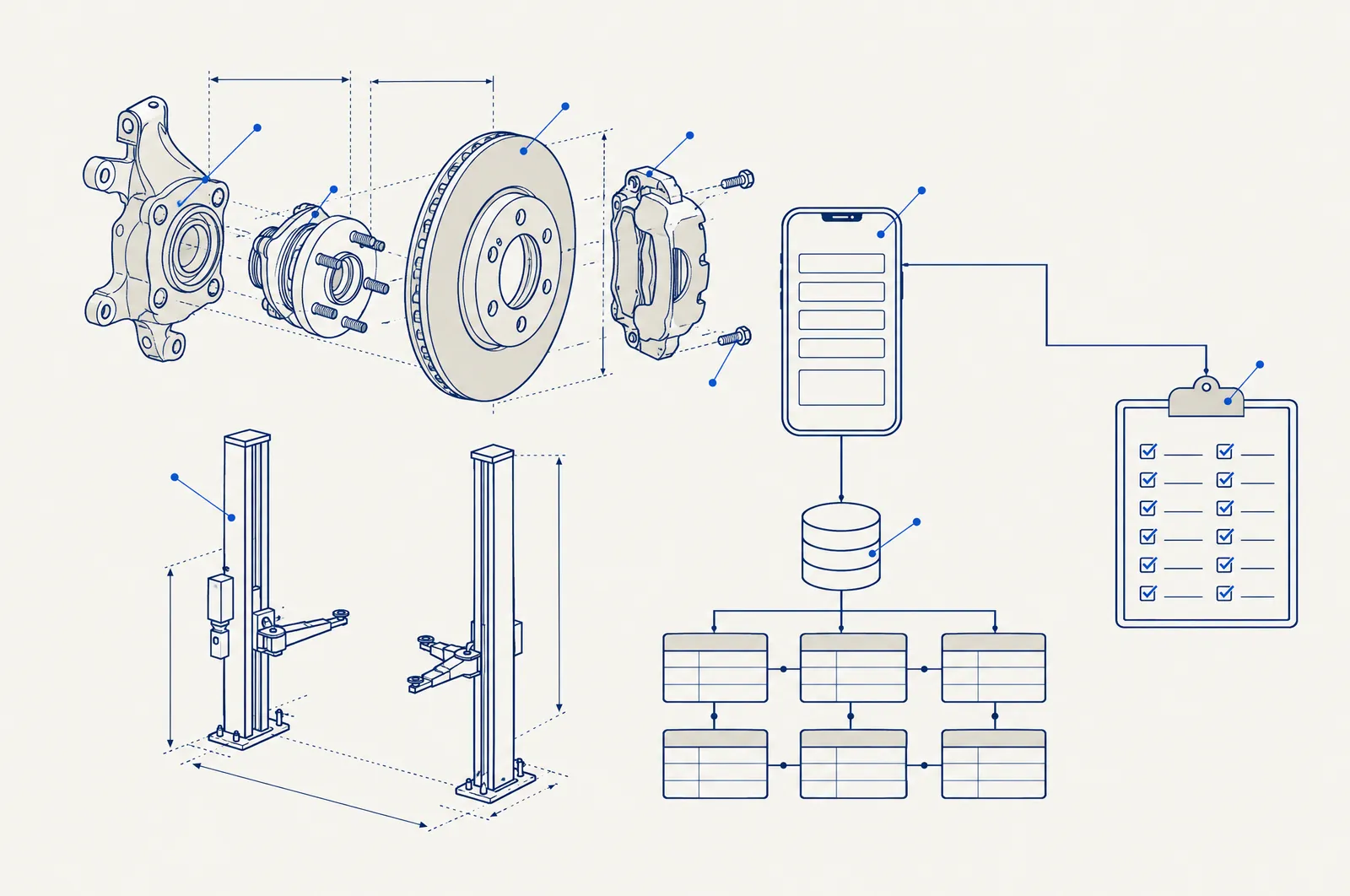
A CRM is only worth having if the people doing the work keep it up to date, so its screens have to fit where the work happens. At a desk that means quoting and invoicing in one place; in a workshop it means a job raised on a phone next to the car.
We build CRMs end to end: the data model, the interface, the mobile client if there is one, and the migration that brings years of existing clients, jobs and invoices across without losing a line. The migration is written as code and verified by reconciliation, with row counts and money totals compared between old and new, and the import failing loudly if they disagree.
In one published study we rebuilt a motorsport workshop's hand-rolled PHP tool as a Next.js system with a native Android client: a job raised at the car, an invoice produced from it, a payment recorded against it, and invoice drafts that survive the phone being put down mid-job.